Thomas Jefferson in Paris: How French Food Crossed the Atlantic
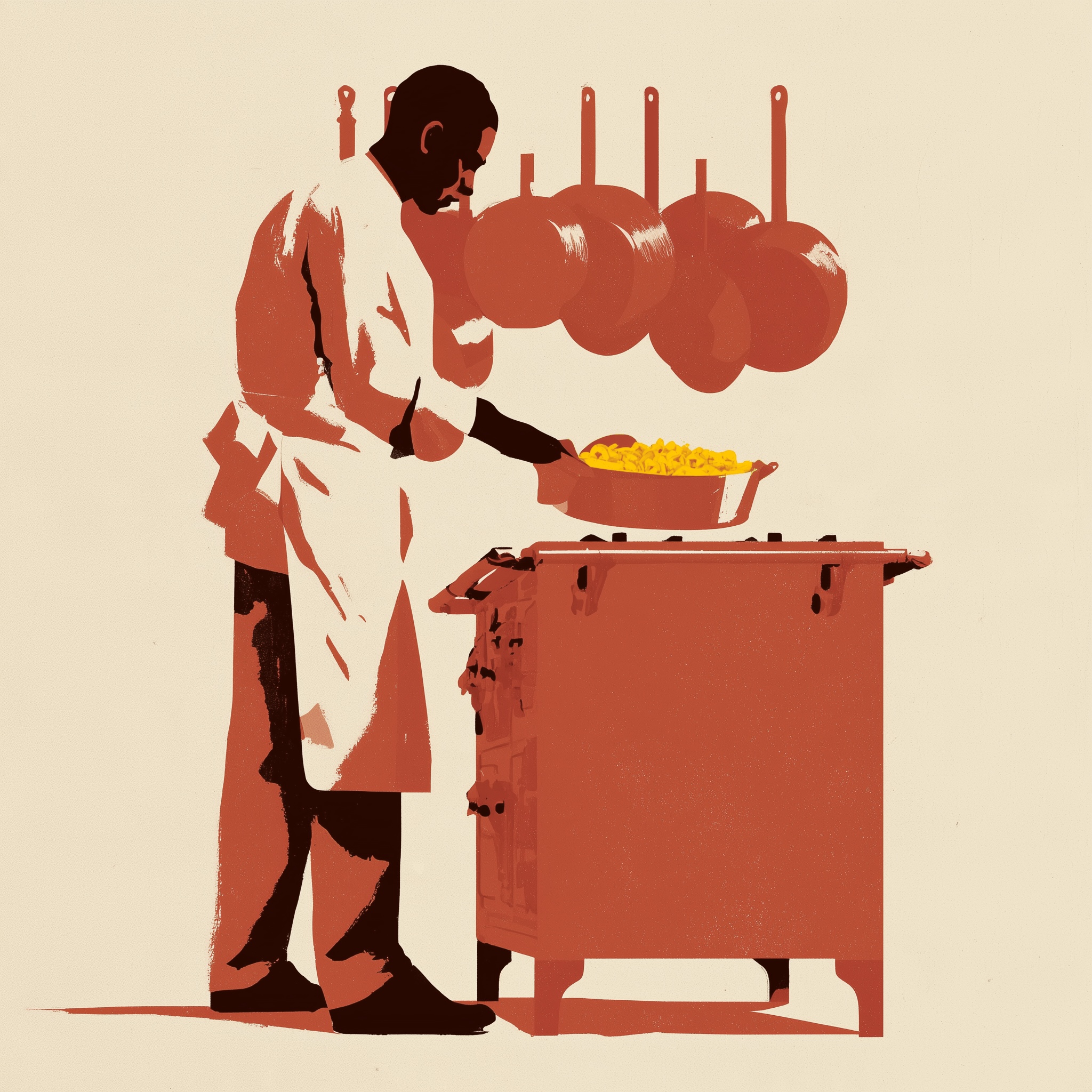
Ask an American what Thomas Jefferson gave the nation and you will hear about the Declaration of Independence. Ask what he gave the nation's dinner table and you will mostly get a blank look, although the answer sits in half the kitchens of the country: mac and cheese, French fries, vanilla ice cream.
He invented none of them. He brought them home from Paris, along with something much harder to pack, a man who knew how to cook them.
Five years at the best table in Europe
Jefferson arrived in 1784 and stayed on as minister to France when Franklin went home. From 1785 he lived at the Hôtel de Langeac, on a stretch of the Champs Élysées that was still more country road than avenue.
What he found at the French table was less a cuisine than a system: sauces that took two days, vegetables served for their own sake, wine treated as conversation and not as fuel.
The chef nobody put on the menu
With him in 1784 was James Hemings, nineteen years old, enslaved at Monticello and the older brother of Sally Hemings, brought to Paris to learn French cookery. He trained with a caterer named Combeaux, then with pastry cooks, and finally in the household of the Prince de Condé, at Chantilly.
I think about that apprenticeship whenever someone asks me how a cook actually learns. Not from books, in my experience. When I had the Lobster Bar, Pierre Jancou, the restaurateur behind Racines and Vivant and one of the most seductive human beings I have ever let into a kitchen, came to spend a week in mine for a pop up. I watched him take almost nothing and turn it into magic, through the right product. What he taught me, without ever putting it into words, was when to stop. Talent, in a kitchen as on the page, is often the ability to quit before a dish turns heavy, or pompous, or clever, and to trust the first spark. The great difference with writing is the verdict. A book waits years to be judged. A plate is judged in the time it takes someone to chew.
Hemings got that verdict every night. By 1787 he ran the kitchen at the Hôtel de Langeac. Jefferson paid him half what the French chef before him had earned, and Hemings spent part of it on a tutor until he spoke better French than his employer.
This part should stay uncomfortable. In Paris Hemings earned a wage, and under French law he could probably have sued for his freedom. He did not. In 1789 he sailed back to Virginia, still enslaved, and later negotiated his freedom on one condition: that he first train his younger brother Peter to take his place at the stove. He was freed in 1796 and died in 1801, at thirty six. Every plate of mac and cheese in America owes him a moment of silence.
What came back in the luggage
Jefferson left Paris in September 1789 with crates of books, wine, seedlings and kitchen equipment, a pasta machine among them. Later shipments read like a gourmet's shopping list: macaroni, Parmesan, figs from Marseille, mustard, anchovies.
The macaroni became a baked dish of pasta, butter and cheese, served at the President's House. The potatoes became pommes de terre frites à cru, en petites tranches, raw potatoes fried in small slices, and his notes contain what may be the earliest American mention of the French fry.
When I tell my American guests that mac and cheese came home from Paris, cooked by an enslaved chef, they are stunned every time. Then they ask whether the French eat it. I have to confess we don't. We can take great pleasure in simple things, but we stop just short of mac and cheese.
Fries, on the other hand, I take personally. At the Lobster Bar I changed potato varieties two or three times a year to get the best ones, and fried them twice, a first bath at low temperature and a second one very hot. My customers came back for the sauce as much as for the fries: a tarragon mayonnaise with a little shallot.
Then there is the ice cream. Jefferson wrote out a vanilla ice cream recipe in his own hand, kept today at the Library of Congress. He served it at official dinners, sometimes wrapped in warm pastry, to guests who were not sure whether to be delighted or alarmed.
Not everyone was charmed. Patrick Henry accused him in a speech of having "abjured his native victuals", which is to say that he had gone French. It was meant as an insult, and Jefferson seems to have taken it as a menu.
Finding Jefferson's Paris today
The Hôtel de Langeac is long gone; its site, at the corner of the Champs Élysées and rue de Berri, is luxury boutiques and traffic. A bronze Jefferson stands on the quai Anatole France, looking at the Seine as though counting barges of wine.
His Paris is easier to find at the table. In Saint Germain des Prés, where the American envoys of those years dined and argued, bakers and cheesemongers still do the things that stunned him, and we follow their trail on the Saint Germain Food Tour. For the other American addresses, see American History in Paris.
Quick answers
Did Thomas Jefferson invent mac and cheese?
No. Baked pasta with cheese existed in Europe long before him. He helped make it popular in America, cooked at his table by James Hemings and those he trained.
Did Jefferson bring French fries to America?
He brought back a French recipe for fried potatoes, and his notes contain what may be the earliest American reference to them.
Who was James Hemings?
An enslaved man from Monticello who trained as a French chef in Paris from 1784, ran the kitchen of Jefferson's Paris residence, and was freed in 1796.
Come hungry. Leave with stories.
Private food and history tours in Paris. Your party only, three hours, with Mathieu.