Les Misérables in Paris: The Real Places Behind Victor Hugo's Novel
It all starts with a loaf of bread.
Winter, 1795. A tree pruner from the Brie countryside has no work, a widowed sister and seven hungry children. One Sunday evening he punches through a baker's window and grabs a loaf. He gets five years in the galleys at Toulon, then four escape attempts that each add to the bill, and in the end he serves nineteen years for it. He never even got to eat the bread.
I think about him most mornings, standing in line at my bakery on rue du Nil, waiting for my petit épeautre loaf. In France the price of bread has toppled kings, and Hugo, who knew it, opens his novel on hunger. Most of his Paris is gone, but enough remains to follow him, ideally on a full stomach.
6 Place des Vosges, where it began
In October 1832, a few months after the uprising that would become the heart of the novel, Hugo moved into a second floor apartment on Place Royale, now Place des Vosges. He stayed sixteen years. He began Les Misérables there, and finished it in exile on Guernsey.
The apartment is now a free museum, with a Chinese dining room he designed himself, with more passion than restraint, which makes it all the more touching.
I have always had a soft spot for Hugo at the table. At twenty eight he had set off the battle of Hernani, a premiere so rowdy that Théophile Gautier led the charge in a scandalous red waistcoat. Hugo was, in his way, one of the first punks. He stayed one at dinner. Guests watched him crunch crayfish and lobster whole, shell and claws included, then finish with orange quarters dipped in his wine, peel and all. When I had the Lobster Bar, I never once saw a customer eat the shell. But I thought of Hugo behind the stove, and of the idea that you can stay a little free, even when the whole of Paris is watching you eat.
The building holds a darker memory too, the one that moves me most. In June 1848, insurgents broke into his home, and someone rushed up to him at the Assembly to announce that his house was on fire. His family was safe. But a young soldier was mortally wounded in his courtyard, the courtyard you cross today to visit the museum. Hugo saw human fury from the front row, and a good deal of it went into the book.
Saint Paul Saint Louis, two weddings
Five minutes south, on rue Saint Antoine, stands the church of Saint Paul Saint Louis. Léopoldine, Hugo's eldest daughter, married Charles Vacquerie here in February 1843, and her father gave the church two holy water fonts shaped like seashells. They are still by the door.
Seven months later the couple drowned in the Seine at Villequier. She was nineteen. Hugo was travelling and learned the news from a newspaper, in a café.
In the novel, Marius and Cosette marry in this same church, on Mardi Gras 1833. I have never been able to read that chapter without thinking that Hugo was giving his fictional daughter the long happy marriage his real one never had. Stop by the fonts, and light a candle if you feel like it.
The barricade, and the stuffed carp
The great barricade of the novel stood near Les Halles, against a wine shop called Corinthe. The house specialty was carpes au gras, a stuffed carp that Hugo swears could be eaten nowhere else in the world. The young republicans ate there, drank there, paid badly, and then turned the place into a fortress using its own furniture. Having run a restaurant myself, I cannot read this part with complete detachment.
Hugo tells us that rue de la Chanvrerie and Corinthe vanished beneath rue Rambuteau. Stand where rue Rambuteau meets rue Mondétour and you are more or less on the spot, which today means a shoe shop, a crowd and delivery scooters. Gavroche died here, singing. The uprising of June 1832 was real, and Hugo, walking nearby, had to take shelter in a covered passage while the bullets flew.
The Luxembourg, and a secret garden
Marius first sees Cosette in the Luxembourg Gardens, on a bench beside an old man in a grey coat. He comes back every day for weeks. Today we would call it stalking. In 1832 it was called literature. Valjean then hides her in a house with an overgrown garden on rue Plumet, now rue Oudinot, in the 7th arrondissement, still very quiet.
The elephant of the Bastille
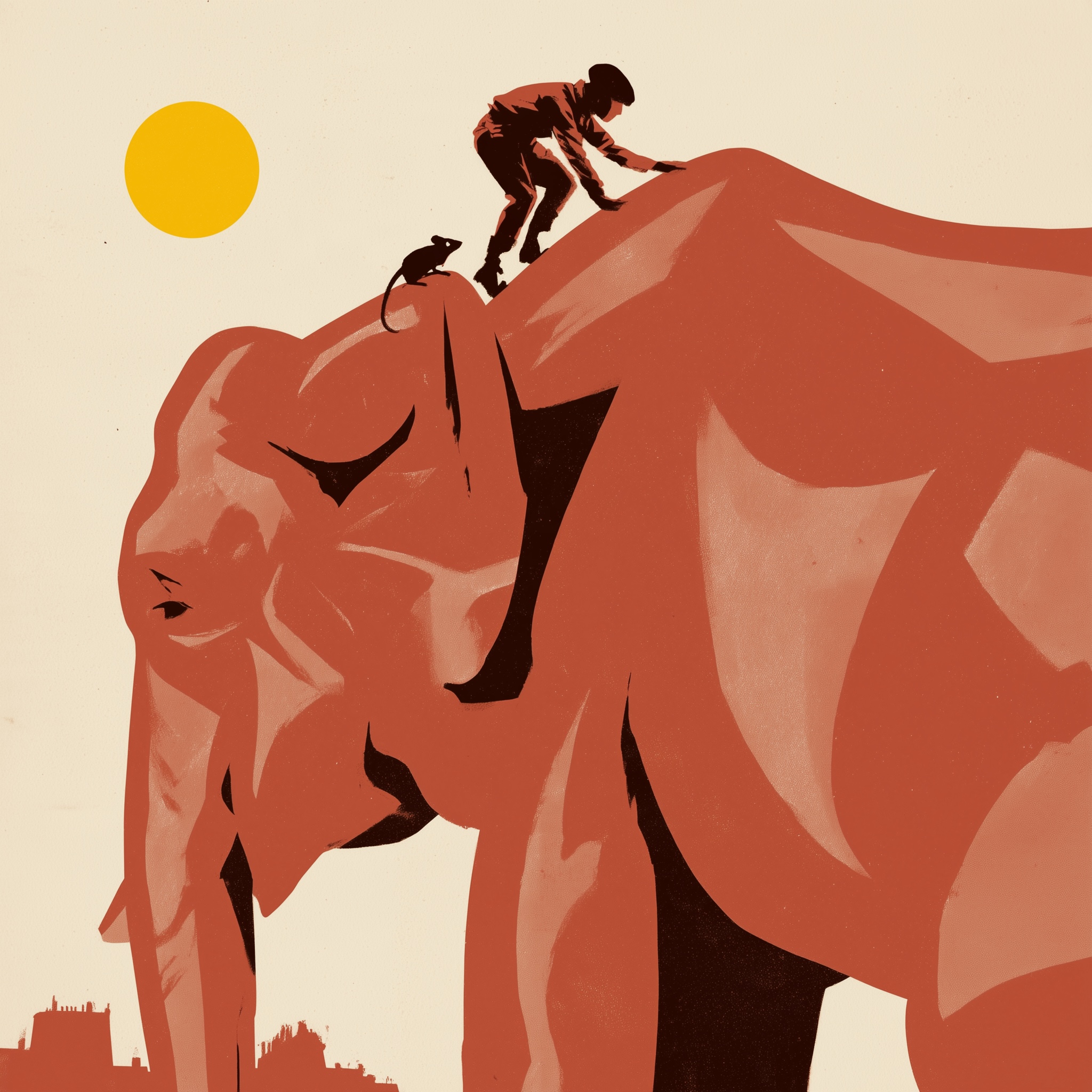
On Place de la Bastille once stood a plaster elephant about forty feet tall, the full size model of a bronze fountain Napoleon never got. It stayed for decades, cracking and filling with rats. Hugo put Gavroche inside, asleep in its belly with two lost little boys, so that an emperor's dream ends up as a street boy's bedroom. It was torn down in 1846.
Following Hugo today
The southern Marais, between Hugo's apartment and the church of the two weddings, is one of the best places in Paris to read the city and taste it at the same time. A walk on Victor Hugo's trail is one of the stories you can choose for a Full Day in Paris.
Bread included this time, and nobody ends up in Toulon.
Quick answers
Where did Victor Hugo live in Paris?
Among other places, at 6 Place des Vosges from 1832 to 1848. His apartment is now the Maison de Victor Hugo, a free museum.
Where do Marius and Cosette get married?
At the church of Saint Paul Saint Louis, on rue Saint Antoine, where Hugo's own daughter Léopoldine had married in 1843.
Why did Jean Valjean go to prison?
He stole a loaf of bread to feed his sister's seven children. Sentenced to five years, he served nineteen because of his escape attempts.
Come hungry. Leave with stories.
Private food and history tours in Paris. Your party only, three hours, with Mathieu.