Benjamin Franklin’s Paris: The Man Behind the Legend
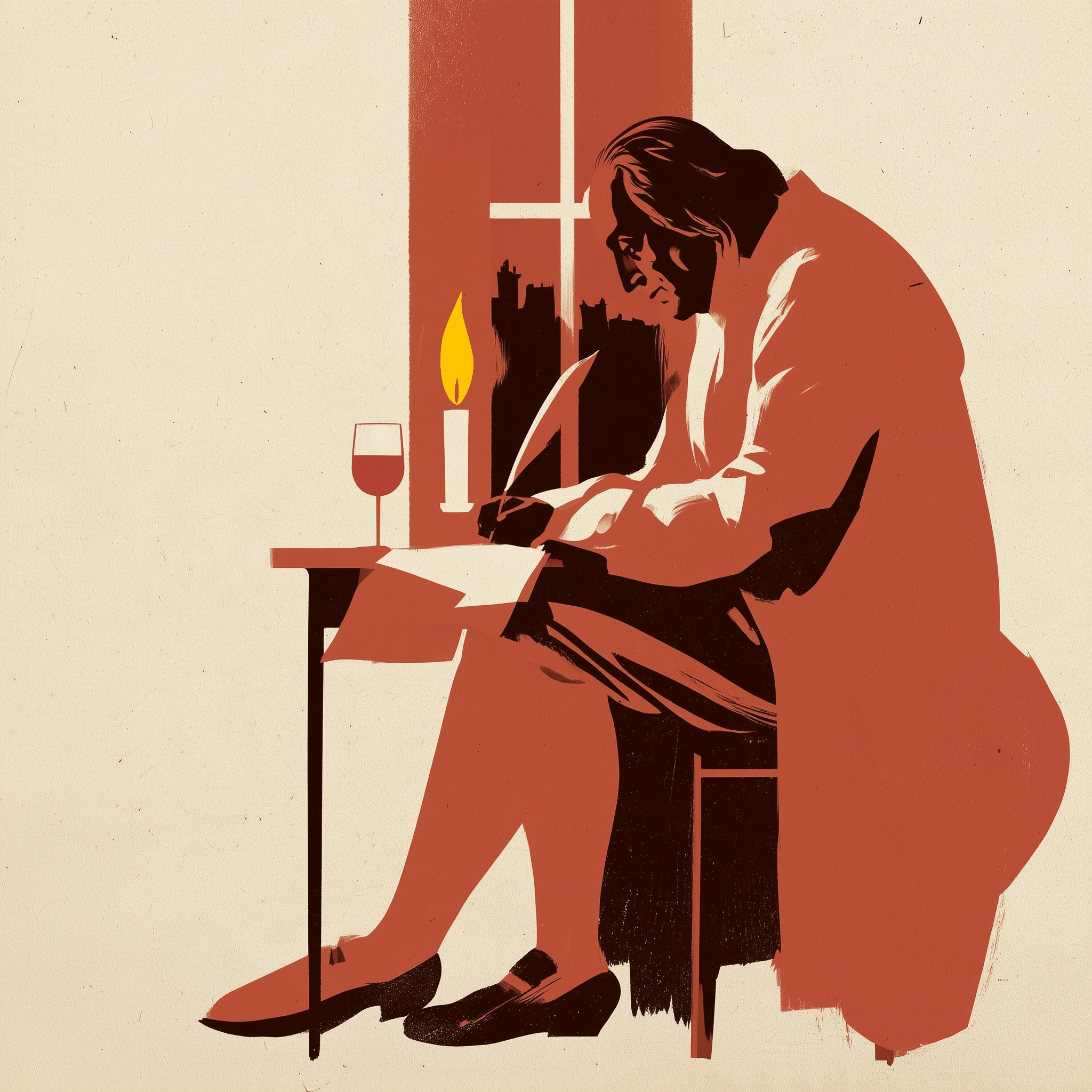
Benjamin Franklin reached Paris in December 1776, seventy years old, with gout, a cough and an impossible mission: persuading one king to pay for a rebellion against another.
What surprises my American guests most is not the treaty. It is his age: seventy, balding, gouty, and Paris found him irresistible. I think that is exactly why the French adopted him. Here, flirting and the pleasure of a sparkling conversation are taken very seriously, and they are not so far from diplomacy: the same patience, the same games, the art of saying a great deal without quite saying it. Franklin played both at once.
A fur cap among the wigs
While the court powdered its wigs, he turned up in a plain brown suit and a fur cap. The French saw exactly what he wanted them to see, the philosopher from the New World, and put his face on medallions, rings and snuff boxes, until he wrote home that it was now about as well known as the moon.
Passy
He lived at the Hôtel de Valentinois in Passy, then a village above vineyards sloping down to the Seine. He put a lightning rod on the roof, naturally, and a printing press in the house, on which he printed little texts for no other purpose than to make his friends laugh.
The cellar
Most of his diplomacy, if you ask me, happened at the table. The cellar at Passy held more than a thousand bottles, Bordeaux, Burgundy, Champagne, sherry, and his maître d’hôtel noted every bottle opened, day by day. Those charts survive. In December 1782, a few days after the preliminary peace with Britain was signed, the daily bottle of ordinary table wine was quietly replaced by a bottle of red Champagne. I like to think someone was celebrating.
If I could have him to dinner tonight, I know what I would open: a Grain Noble from my friend Marie Thérèse Chappaz, in Fully, in the Swiss Valais, one of the great pioneers of biodynamics in Switzerland. Her sweet Petite Arvine, made from late grapes touched by noble rot, is one of my favorite wines in the world. I would pour it with Roquefort, a cheese with a temper, which suits a man who never lacked one. Franklin was a serious cheese man anyway. He once sent a friend in Rhode Island a recipe for making Parmesan, with a piece of the real thing so she would know when she had got it right.
Two Frenchwomen
There were two of them, and they knew about each other. Madame Brillon, his neighbor, a gifted musician forty years younger, called him “mon cher papa” and played chess with him from her bath, one evening for so long that he wrote the next day to apologize.
Madame Helvétius, a philosopher’s widow, kept a salon in Auteuil full of abbés, cats and great minds. Franklin proposed to her, in a form clever enough to be read either way. She said no. When he finally left France, she sighed that they would never see the great man again. His answer: that is entirely your fault, Madame.
The spy in the house
There was a catch to all that charm: a good part of what Franklin said in Passy ended up in London. His secretary, Edward Bancroft, was on the British payroll the whole time, leaving his reports in a bottle under a tree in the Tuileries. Franklin suspected there were spies around him and shrugged: as long as he told them nothing private, why bother sending them away? Bancroft’s secret came out decades after his death.
The apricot tree
In 1784 Paris went mad for Mesmer, who claimed to cure everything with an invisible magnetic fluid. The king put Franklin at the head of a commission to investigate, next to Lavoisier and a certain Dr. Guillotin, and some of the tests took place in his garden. A young man who swore he could feel the fluid was blindfolded and led to the trees, one of which, an apricot, had supposedly been magnetized. He fainted in front of the wrong one. Mesmer never recovered.
Potatoes
Franklin was also a guest at the dinners of Parmentier, the pharmacist who spent his life convincing the French that the potato was not pig feed. Parmentier never cooked the hachis that carries his name, it was named after him much later, but the dish has done its part for his cause. It is the taste of my childhood winters. My grandmother made it, and I still make it when the cold sets in.
Where to find him
The plaque on rue Raynouard, and his statue nearby on the square de Yorktown. The treaty he signed at 56 rue Jacob has its own story in American History in Paris. And in Saint Germain, the Procope claims him as a regular, tradition rather than archive, but a pleasant one.
I have a theory about Franklin. Everything Philadelphia found a little embarrassing about him, the endless talk, the flirting, the appetite, Paris took as proof of good character. Here he was never too much. He was one of us, so people listened. On the Saint Germain Food Tour, he joins us at the table, which he loved, and in the art of conspiracy, which he practiced better than anyone.
Quick answers
Where did Benjamin Franklin live in Paris?
In Passy, at the Hôtel de Valentinois, from 1777 to 1785. A plaque on rue Raynouard marks the site.
Did Franklin like French wine?
Very much. His cellar at Passy held more than a thousand bottles, from Bordeaux and Burgundy to Champagne.
Was there a spy in Franklin’s household?
Yes. His secretary, Edward Bancroft, was a British agent, a fact revealed only long after his death.
Come hungry. Leave with stories.
Private food and history tours in Paris. Your party only, three hours, with Mathieu.