Why Mold Is Your BFF
I have watched the same face a hundred times.
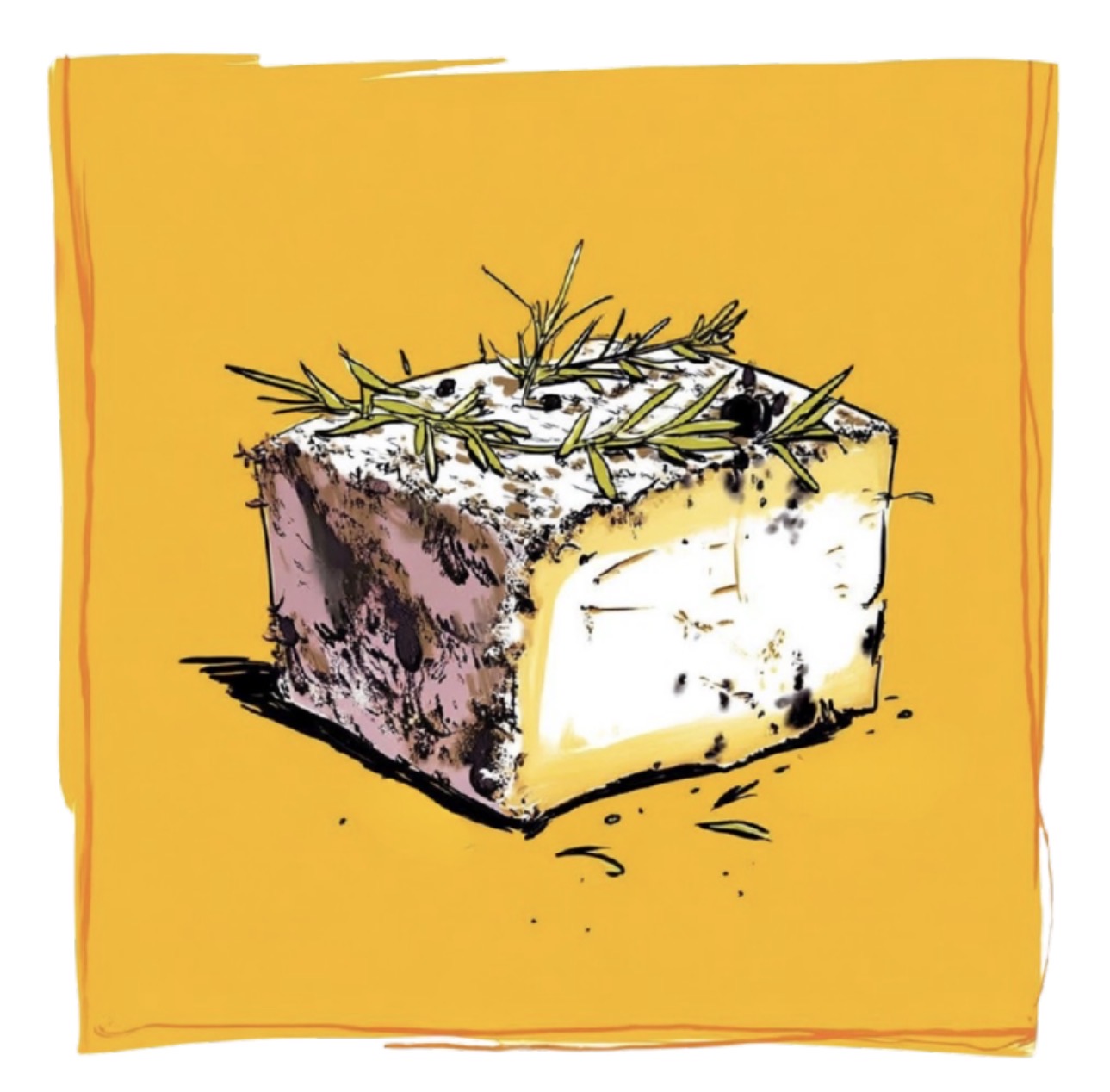
The cheese comes out. Brin d'amour, a Corsican raw milk sheep's cheese rolled in the herbs of the maquis, soft beneath a rind covered in a white and green mold that, to an untrained eye, looks like exactly the sort of thing you would throw away. I pick it on purpose. It is my teaching cheese: the one whose appearance intimidates people the most, and the one that converts them the fastest. The mouth tightens. The chin pulls back half an inch.
First, I ask them to smell it. And that is where it begins to open: the herbs catch them off guard, the rosemary, the gorgeous waft of juniper and fennel, the dry warm smell of the garrigue, the Corsican hillside packed straight into the rind. They lean back in spite of themselves. Then I cut a piece and urge them to eat the whole thing, rind included, before they decide anything.
And then the second surprise arrives, the one that, without fail, rearranges the whole face. That moment of pure astonishment, that disarming little jolt, is exactly why I love this job. The eyes open. The shoulders drop. They go back for more without being asked, and in ninety seconds a person rewrites thirty years of instinct.
So before I tell you why your disgust is wrong, let me tell you why it is also reasonable.
Your fear makes sense. It is your reference that is dead.
"Mold means throw it out" is a good rule. It kept your ancestors alive. And where most visitors come from, it is usually right, because the cheese they grew up with is, for lack of a kinder word, dead. Industrial cheese is made from pasteurized milk: heated until everything in it, the good and the bad, is killed. Safe, uniform, inert. When that kind of cheese grows something, your instinct is right. Nothing good is happening in there.
A raw milk cheese is the opposite. The milk was never sterilized, so it still carries living cultures, and those cultures do the work. The rind is not the cheese failing. The rind is the cheese finishing. Affineurs spend their lives in cellars at twelve degrees coaxing exactly that bloom into being, because that living surface is where the flavor is made.
The rind is not the cheese failing. The rind is the cheese finishing.
How to eat the cheese rind
So, should you eat the rind? Almost always, yes. The method is two words long. You eat it. Yes, the grey bloom. The very part you were about to hack off and bin is precisely where the affineur stashed months of work. It is the same instinct that separates a tourist from someone who actually knows where to eat in Paris.
It was never just about cheese
Once the right reflex settles in, it is everywhere. The dry white coat on a good saucisson: same dusting, same flinch. The trembling jelly around a slice of pâté en croûte, which is not mold at all but trips the same alarm: something soft, something wobbling, something a little alive. What frightens people, once they have lost the habit, is the texture of the living. French cooking never stops handing you things that have not quite finished moving.
One day, in front of a slice of pâté en croûte, I watched a girl of nine do what her parents did not dare. While they eyed the jelly with polite suspicion, she took her piece, jelly and all, with that quiet courage children have. She tasted it, rolled her eyes, and blurted out, "whoa, this is good." And just like that, the parents were trapped. No backing out without looking like sheer cowards. So they tasted too, hands almost trembling, and discovered two things: that it was delicious, and that the jelly tasted of broth, the result of meticulous craftsmanship in balancing the recipe. All their preconceptions collapsed at once, thanks to their nine year old. We keep saying children are the pickiest eaters. It is often the reverse. They are the ones with that naive openness that turns out, in the end, to be the truest and most interesting of all.
What being Parisian really means
It is not an accent, a passport, or a veneer of good or bad manners. You can live here forty years and still recoil from the rind. You can land this morning and eat it whole by lunch. Being Parisian is a relationship with the living: letting a food breathe, bloom, tremble, and meeting it where it is. It is the same Paris you discover door by door on a good food tour of Le Marais.
So the next time someone hands you a cheese in a grey coat, do not cut it off. Smell it. Then eat it and let go. That small surrender is the most Parisian thing you will do all trip.
Come hungry. Leave with stories.
Private food and history tours in Paris. Your party only, three hours, with Mathieu.