What to Expect on a Napoleon Food Tour in Paris
You've seen the name somewhere. A friend recommended it. A concierge mentioned it. You read a review that said something like "the best thing we did in Paris". And now here you are, wondering if it's worth it. If it's really different. If it's not just another food tour with better marketing.
Here's what you need to know.
What it is
Three hours on foot in Le Marais. A private tour: just your party and your guide, never strangers, up to eight guests. That's precisely what makes it interesting. The conversation follows your questions, not a script, and a guide who has spent twenty years among the artisans and archives of Paris answers each of them with a slightly excessive obsession for history, gastronomy, and the invisible connections between the two.
You'll walk down streets you would have passed without seeing, enter inner courtyards that Google Maps doesn't know about, and taste things you won't find in any travel guide. Not because they're secret. Because you have to know where to look.
Every tour ends the same way: seated, with wine and cheese, taking the time to let everything settle. The stories, the flavors, the walk. It's not a rushed goodbye on a street corner. It's a real ending. The kind where you don't want to get up.
It's not a guided visit with tastings. It's a conversation that lasts three hours, during which you eat, you drink, and you understand why this neighborhood is what it is.
What it isn’t
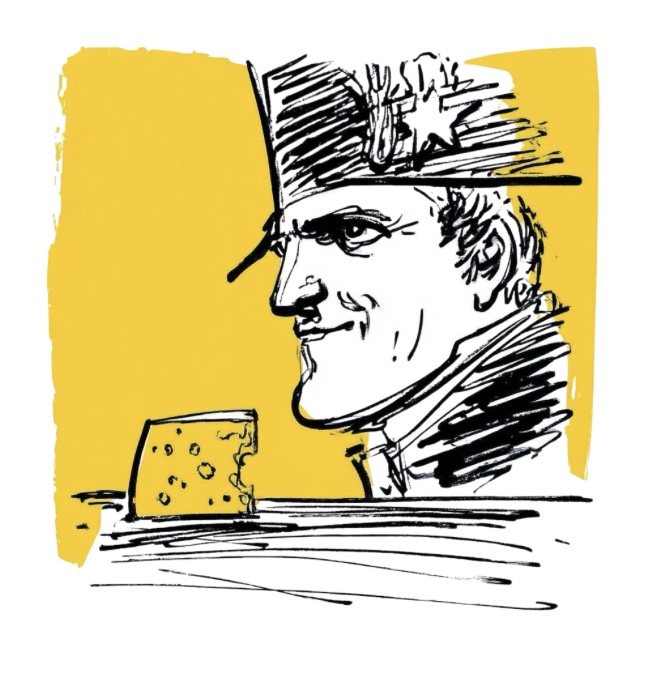
It's not a tour where someone hands you samples while reciting fact sheets. Nobody is going to tell you "and now, taste this cheese, it's delicious" without explaining why it's delicious, where it comes from, who made it, and what connection it has with a Corsican emperor who loved Gruyère more than some of his generals.
It's not a history lecture either. It's more insidious than that. You think you're doing a food tour, and after an hour you realize you're learning the history of France through your mouth. Literally.
And it's not a marathon. The pace is human, and it is yours. About two kilometers in three hours, which gives you an idea of the delicious slowness of the thing. There are moments where we stop, where we look, where we digest what we've just heard as much as what we've just eaten. Napoleon is said to have called a leader a dealer in hope. A good tour works the same way. We don't rush you. We take you somewhere.
People don’t leave with just the memory of a good meal. They leave having understood something about Paris they didn’t understand before. And that’s the kind of memory that doesn’t fade.
What people say afterwards
They don't say "the food was good". That's what people say after an average tour. They say things like "I will never look at a cheese shop the same way again". Or "my husband didn't touch his phone for three hours and if you knew him you'd understand how extraordinary that is". Or "our 13-year-old daughter said it was better than Disneyland, and she never says anything positive about anything".
What comes up most often is the word "understand". People don't leave with just the memory of a good meal. They leave having understood something about Paris they didn't understand before. And that's the kind of memory that doesn't fade.
What you should know before you come
Wear comfortable shoes. Two kilometers is nothing on paper, but we stop often and you're on your feet. Come with an empty stomach, or at least not a full one. You're going to eat more than you think. And don't wash your hands right away afterwards. The smell of aged Comté on your fingers is the best souvenir you'll bring home.
Come with questions. Any questions. About Paris, about food, about Napoleon, about why the French stand in line for bread. There are no stupid questions. There are guides who don't know how to answer them, and guides who turn your question into a story you'll tell for ten years.
The bottom line
A Napoleon Food Tour is not a tourist activity. It's a doorway. After three hours, you don't see Le Marais the same way. You don't eat the same way. And most likely, you don't see Paris the same way.
That's a lot to ask of three hours and a piece of Comté. But Paris has always been a city that gives more than you expect. As long as you know who to ask. ■
Come hungry. Leave with stories.
Private food and history tours in Paris. Your party only, three hours, with Mathieu.