Why Mold Is Your BFF
I have watched the same face a hundred times.
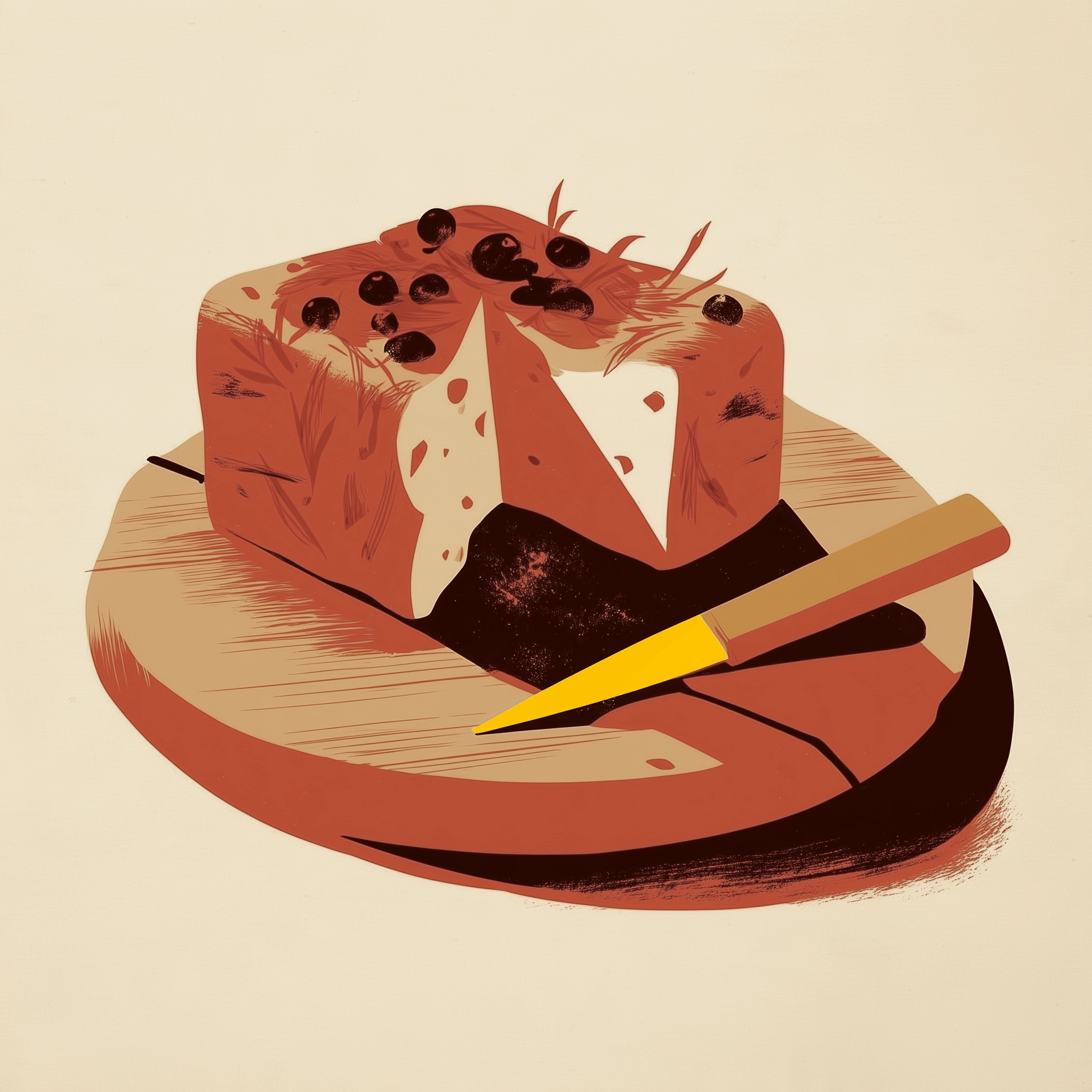
The cheese comes out. Brin d'amour, a Corsican raw milk sheep's cheese rolled in the herbs of the maquis, soft beneath a rind dotted with white and green mold that, to an untrained eye, looks like exactly the sort of thing you throw away. Mine comes from Laurent Dubois, a Meilleur Ouvrier de France, who ages it to perfection. I pick it on purpose. It is my teaching cheese, the one that intimidates people most and converts them fastest. The mouth tightens. The chin pulls back half an inch.
First, I ask them to smell it. Rosemary, juniper, the dry warm smell of a Corsican hillside packed into the rind. They lean in despite themselves. Then I cut a piece and ask them to eat the whole thing, rind included, before deciding anything. The second surprise rearranges the whole face. The eyes open, the shoulders drop, and they go back for more without being asked. Ninety seconds to undo thirty years of instinct. That little jolt is why I love this job.
Your fear is not stupid
"Mold means throw it out" kept your ancestors alive, and in your own fridge it is sometimes still good advice. Here is what I do at home. On a hard cheese, a spot of unwanted mold gets scraped off, the cheese gets a rub, and I carry on eating it. A hard cheese can even go on ageing quietly in the fridge. A soft cheese that has gone too far and turned aggressive goes in the bin.
But the bloom on a cheese from a good affineur is no accident. It was invited. Pasteurization heats the milk until its own flora is gone, and the cheesemaker then adds back a few standard cultures. Raw milk keeps the whole crowd it came with, from the farm, the grass, the season. That living surface is where the flavor gets made, and it is exactly the part most visitors cut off.
Rind by rind
So, can you eat the rind? Mostly, yes.
Bloomy rinds, like Brie or Camembert. Eat them.
Washed rinds, like Époisses or Munster. Eat them. For me that is not even a question.
Herb or ash coated rinds, like Brin d'amour or Selles sur Cher. That is what they are there for.
Hard natural rinds, like Comté or Parmesan. Perfectly edible, just hard. I usually leave the Comté rind, for the sake of my teeth, while my daughter has happily chewed on them since she was tiny. And a Parmesan rind, or any rind of that family, does wonders in a soup.
Mont d'Or. In season right now, sold only from September 10 to May 10. The washed rind is yours. The strip of spruce bark around it stays in the box. The people who harvest that bark in the Jura forests are called sangliers, which is also the French word for wild boars.
Wax, cloth, bark. No. Leave them on the plate.
The man who peeled everything
One day we had laid out about fifteen cheeses, a magnificent spread. One of my American guests took his little knife and, with real skill, removed every single rind to eat only the heart of each cheese. His plate turned into a lovely piece of geometry. It broke my heart a little, because he was missing half of what was in front of him.
His son, who must have been about sixteen, ate everything, rinds and all. Then the friends around the table started on him. Fine, you only eat pasteurized cheese back home, but today is the day of daring. Cross the Rubicon. Join us.
He started with a Brie de Melun, a very pretty one. To reassure him, I told him to breathe first and smell the rind. No ammonia, I promised, it smells good. He sniffed, looked genuinely surprised, and took a bite. Converted.
It was never just about cheese
Once the right reflex settles in, you see it everywhere. The dry white coat on a good saucisson, same dusting, same flinch. The trembling jelly around a slice of pâté en croûte, which is not mold at all but trips the same alarm. What frightens people, once they have lost the habit, is the texture of the living.
What being Parisian really means
It is not an accent or a passport. You can live here forty years and still recoil from the rind. You can land this morning and eat it whole by lunch. Being Parisian is a relationship with the living: letting a food be alive, and meeting it where it is.
So the next time someone hands you a cheese in a grey coat, do not cut it off. Smell it first. Then eat it. And if you want to practice in good company, that is what The Cheese Vault is for.
Quick answers
Can you eat the rind on French cheese?
Most of the time, yes. Bloomy, washed and herb rinds are made to be eaten. Wax, cloth and bark are not.
Is the white mold on Brie safe to eat?
Yes. It is a mold the cheesemaker puts there on purpose, and it is part of the flavor. A fuzzy spot that appears later in your fridge is another story.
Can you eat the rind of Comté or Parmesan?
Yes, it is edible, just hard. Many cooks simmer Parmesan rinds in soups and broths.
Come hungry. Leave with stories.
Private food and history tours in Paris. Your party only, three hours, with Mathieu.