Saint-Germain-des-Prés: The Neighborhood Where Rebels Invented Two Nations
You think you know Saint-Germain. The cafés. The croissants. The tourists photographing the terrace of the Flore hoping to absorb a little Sartre by osmosis. It's charming. It's also completely beside the point.
Because the real Saint-Germain, the one that matters, the one that changed the world, is not the one of writers. It's the one of conspirators. And that story, nobody tells you.
The cauldron
Picture Paris in the 1770s and 1780s. Beneath the elegant façades of the Left Bank, in the back rooms of cafés, in the cellars, in private salons, a group of men is building something monstrous. Two revolutions. Not one. Two.
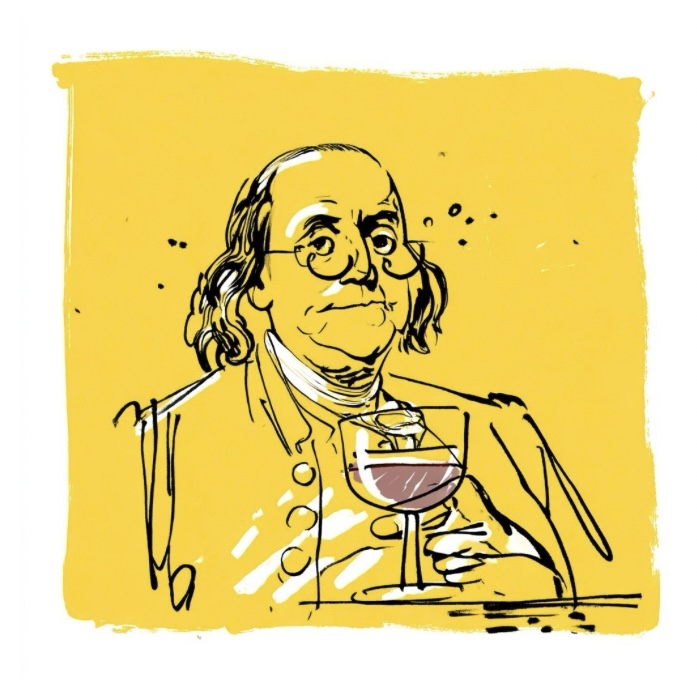
On one side, Benjamin Franklin. He lands in Paris in 1776, officially as ambassador of the American colonies in rebellion. Unofficially, he's a conspirator of genius. He needs money, weapons, and the support of France to beat the English. And he knows exactly where to find all of it: in the salons of Saint-Germain, where the French elite is bored enough to finance a revolution five thousand miles away.
On the other side, the French who welcome him. Enlightened aristocrats, philosophers, encyclopedists, freemasons, dangerous idealists. People who read Voltaire, Rousseau, Diderot, and who are starting to wonder why a king should have all the power when he clearly doesn't have all the ideas.
Between the two, Lafayette. Twenty years old. Wealthy. Idealistic to the point of recklessness. He meets Franklin in Saint-Germain, catches fire for the American cause, and leaves to fight in America against everyone's advice, including the king's. He will return a hero. And he will bring back in his luggage ideas that the French monarchy should never have let him near.
The Procope and the cellars of rebellion
None of this happened in palaces. It happened at the Procope. The oldest café in Paris, founded in 1686, a hundred meters from where you're sipping your café crème today. This is where Diderot and d'Alembert planned the Encyclopédie, the most subversive project of the 18th century. A dictionary, you think. Except this dictionary told the people that knowledge didn't belong to the king or the Church. That everyone could think for themselves. That reason was superior to tradition. In 1751, that was intellectual dynamite.
And it was at the Procope that Franklin sat to meet his contacts. That Robespierre would later sharpen his speeches. That Danton would conspire before conspiring elsewhere. That Marat would write pamphlets between coffees. Saint-Germain wasn't an intellectual neighborhood. It was a neighborhood of would-be terrorists. People who wanted to overthrow the order of the world. And who did.
The same cobblestones that saw Franklin pass in a carriage saw the carts heading to the guillotine ten years later. Saint-Germain has never been a quiet neighborhood. It’s a neighborhood that looks quiet. Which is very different.
The secret deal
What most people don't know is that the American Revolution and the French Revolution were born in the same rooms, carried by the same conversations, sometimes financed by the same people.
Franklin secures the support of France. France sends weapons, money, and eventually an entire fleet. Without France, no victory at Yorktown. Without Yorktown, no United States. It's that simple and that enormous.
In return, American ideas come back to France with Lafayette and the soldiers who fought there. The Declaration of Independence directly inspires the Declaration of the Rights of Man. The word "liberty" passes from one language to the other, from one continent to the other, and explodes in 1789 in the streets of Paris.
Saint-Germain is where that exchange began. Where Americans and French, sitting in the same cafés, walking the same streets, decided that the world as it existed was unacceptable. And that another one had to be built. Even if it meant chopping off a few heads along the way.
What you don’t see while drinking your coffee
Today, you walk past the church of Saint-Germain-des-Prés and you see a very beautiful church. Ancient. Perhaps the oldest in Paris, in fact. You take a photo, admire the bell tower, and keep walking. But it doesn't cross your mind how crucial a role this church played in the formation of the American colonists' plot for independence. You walk past the buildings where Franklin met his contacts and there's no plaque. You walk through streets where men decided the fate of two continents and nothing, absolutely nothing, tells you so.
That's the genius and the frustration of Paris. The most extraordinary history in the world is beneath your feet, behind the doors you don't push, in the cellars you don't go down into. And it's completely invisible if nobody shows it to you.
The bottom line
Saint-Germain-des-Prés is not a neighborhood of cafés and bookshops. It's the neighborhood where two nations were born. Where American rebels and French revolutionaries shared ideas, wine, and a common conviction that liberty was worth the price of blood.
It may be the most important neighborhood in modern Western history. And you can walk through it in twenty minutes without having the slightest idea.
Unless someone tells you the story. ■
Come hungry. Leave with stories.
Private food and history tours in Paris. Your party only, three hours, with Mathieu.