Private Tours in Paris: Why Small Groups Change Everything
There are two ways to visit Paris. The first, you already know. Twenty people, a microphone, a guide who talks to everyone and therefore to no one, a rigid minute-by-minute itinerary, and that permanent feeling of being a tourist. Visible. Cumbersome. Predictable.
The second is the opposite of all that.
Stealth mode
Just your party. Up to eight guests. No microphone. No sign. No single file. You walk through Le Marais and nobody knows you're a group with a guide. You look like what you're supposed to look like: people strolling through Paris. Passersby. Almost Parisians.
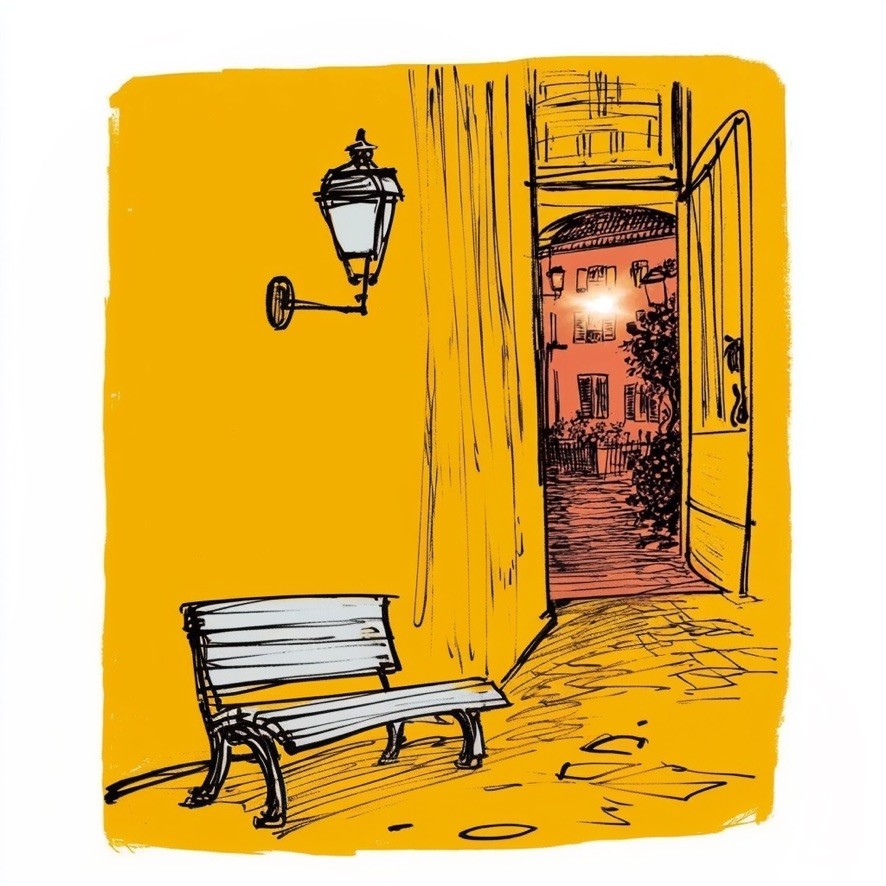
And that changes absolutely everything. Because when you're invisible, Paris opens up. You slip through a carriage door that a group of fifteen can't pass through. You enter an inner courtyard that nobody notices from the street. You stop in front of a detail on a façade without blocking the sidewalk and without eighteen people waiting behind you checking their watches.
You're in spy mode. Discreet, mobile, curious. And Paris rewards spies far better than it rewards tourists.
The alchemy of the moment
A large group follows a program. A small group follows the energy. That's the fundamental difference.
It's raining? We duck into a wine cellar the guide has known for fifteen years and stay half an hour longer than planned, because the wine merchant just opened an exceptional bottle and the conversation is too good to interrupt. Someone in the group is passionate about cheese? We spend more time at the affineur and skip a planned stop. A carriage door is open and behind it there's a garden the guide hadn't planned to show? We go in. We improvise. We follow what the day offers.
That's what a private tour is. Not an itinerary unrolled mechanically. A living organism that adapts in real time to the alchemy of the group, the weather, the tastes, the unexpected. Every tour is different because every group is different. Napoleon, who planned everything with maniacal precision, knew that the best plans are those that can reinvent themselves on contact with the terrain. A private tour is exactly that. A solid plan and the freedom to betray it when the moment demands.
You’re not buying a visit. You’re entering a network of human relationships that took years to weave.
The relationship with the artisans
This is the real secret. And it's the one large groups can never copy.
When a guide pushes open the door of a cheesemonger with four people behind him, he doesn't arrive with a group. He arrives with friends. The cheesemonger has known him for years. They're on first-name terms. They saw each other last week. The guide knows which cheese just came in, which one is at its peak, which one absolutely must be tasted today and not tomorrow.
And the cheesemonger doesn't treat you like tourists because you aren't. You're a friend's friends. He talks to you the way he talks to his regulars. He brings out a cheese he doesn't bring out for everyone. He takes the time to explain, really explain, not the abbreviated version for a group in a hurry. And sometimes, which happens more often than you'd think, a conversation takes root. You exchange stories. You laugh. You come back the next day to buy something to bring home. The tourist has become a customer. The customer sometimes becomes a friend.
It's this relationship, intimate, personal, built over years of trust between the guide and the artisan, that transforms a food tour into something impossible to replicate on your own. You're not buying a visit. You're entering a network of human relationships that took years to weave.
The luxury of flexibility
When people hear "private tour", they think about the price. That's normal. But what you're paying for isn't prestige. It's freedom. The freedom to slow down when something fascinates you. The freedom to ask the strange, personal question you would never dare ask in a group of twenty. The freedom to say "can we stay here five more minutes?" and have the answer always be yes.
It's the rarest luxury that exists today: a moment built entirely around you. Not around a program. Not around a schedule. Around your curiosity, your pace, what makes you happy.
The great Parisian salons knew it long ago: beyond a handful of guests, one no longer converses, one performs. Two centuries later, the rule hasn't changed.
The bottom line
Paris is a city of secrets. Its treasures are not on the grand avenues. They're behind the carriage doors, in the cellars beneath the cobblestones, in the back rooms where nobody enters without being invited. These places are not made for crowds. They're made for private parties who know how to be discreet, for guides who know the right doors, and for artisans who only open those doors to people they trust.
A private tour doesn't show you a better Paris. It shows you the invisible Paris. The one that only reveals itself to those who know how to slip through. ■
Come hungry. Leave with stories.
Private food and history tours in Paris. Your party only, three hours, with Mathieu.