What's in Season in Paris in December?
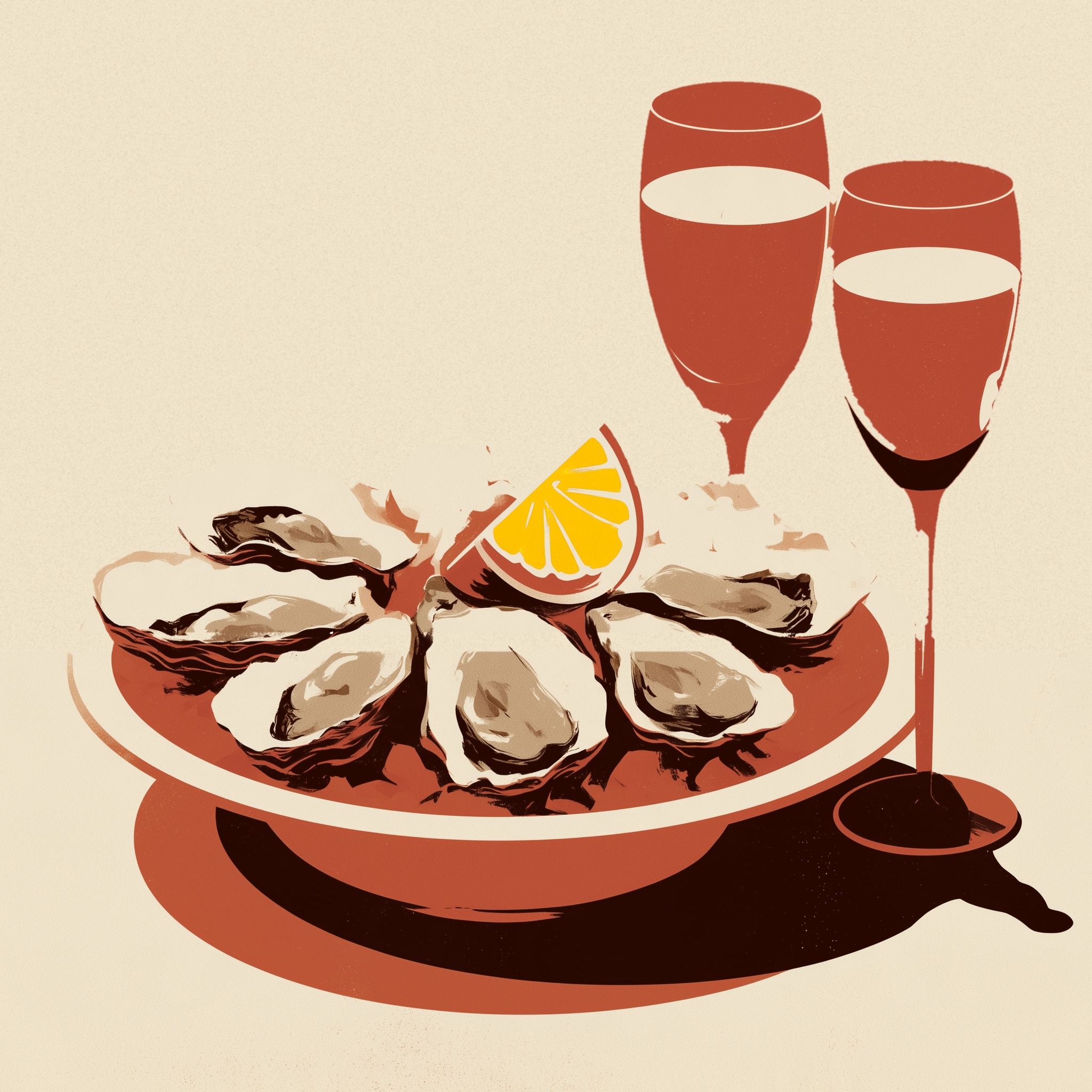
Why does a country that eats oysters all year suddenly lose its mind over them in December?
Because December in Paris is less a month than a menu. The markets change color, fishmongers bring out crushed ice by the shovelful, and cheese counters start selling something you are supposed to eat with a spoon.
Oysters, all of them
Something like half of all the oysters France eats in a year go down during the holiday season. A French Christmas without oysters would be like Thanksgiving without the turkey. December is the best of the months with an R: cold water, firm and briny oysters.
Now for the part where I lose friends. A good oyster needs nothing. Every brasserie in Paris will bring you a little pot of shallot vinegar with a smile, and it simply murders the oyster. At a pinch, a drop of lemon. That is all.
My favorite oyster in the world is a contradiction. I am obsessive about terroir, and yet the oyster I love most is very nearly a human invention. It comes from the Étang de Thau, a Mediterranean lagoon near Sète with no tide to speak of. Florent Tarbouriech, an oyster farmer from Marseillan with the soul of an inventor, spent years working out how to give his oysters one anyway. A mechanism powered by solar panels lifts them out into the air and lowers them back into the water, again and again, recreating the rhythm of the Atlantic. What comes out is the Spéciale Tarbouriech: big, fleshy, incredibly sweet, with a hazelnut finish and a shell blushed pink by the Mediterranean sun. They are very hard to find in Paris. A good share of them, as far as I know, leaves for Japan, and I cannot say I blame them.
Scallops, coral included
Coquilles Saint Jacques can only be fished from October to mid May, off Normandy and Brittany, and by December they are at their best. Buy them in the shell, ask the fishmonger to open them, and keep the orange coral. Americans tend to throw it away, which makes French people want to cry quietly into their napkins.
Mont d'Or, the cheese you eat with a spoon
The French Mont d'Or is made from raw milk in the mountains of the Doubs, and sold only from 10 September to 10 May. It is ringed with a strip of spruce bark and laid in its own spruce box, which is where its faint smell of forest comes from.
I have a confession to make, and as a Swiss it costs me something. In my own canton of Vaud, we make a cousin called Vacherin Mont d'Or, from thermized milk, with the same spruce strap and the same box. It is very good. I prefer the French one. It has a little more finesse while keeping all its character, and my compatriots will forgive me eventually. Or not.
The second confession will upset more people: a real Mont d'Or is not baked. Everyone tells you to pour in a splash of Jura white wine and slide the box into the oven, and it is delicious that way, but the heat kills the spruce. That warm, resinous scent is the whole point. Purists eat it unbaked, at room temperature, with a spoon, and say nothing for a while. That is how we serve it in the cellar of The Cheese Vault.
The black truffle
In the Middle Ages, the story goes, the truffle was the devil's fruit: a black thing growing at the foot of oaks, the witches' trees, with no seed anyone could see. In 1825 Brillat Savarin crowned it for good by calling it the diamond of the kitchen. The name stuck, and so did the price.
The black winter truffle comes out from December to March. In Lalbenque, in the Lot, the market fills the main street every Tuesday afternoon, nothing changes hands before the whistle, and prices can climb to 800 or 1,000 euros a kilo.
Choosing one is simpler than people think. A good truffle is hard, really hard; if it gives under your fingers, it is too old or not very good. It should also reach you before you reach it. A real truffle smells from across the table. If you have to press your nose against it to coax out a little perfume, put it down.
Then do as little as possible. Big shavings over a proper brouillade of scrambled eggs is still my favorite. Something this explosive asks for nothing but simplicity. Truffle oil, for the record, is mostly a synthetic aroma.
Corsican clementines, leaves on
Market stalls fill with small clementines from Corsica, still attached to their dark green leaves. A fresh, supple leaf means the fruit was picked days ago rather than weeks. Peel one in the street and your hands will smell of it until lunch.
The rest of the month
Roasted chestnuts from carts on the boulevards, in paper cones that burn your fingers through your gloves. A capon for Christmas dinner. Endives, rolled in ham and béchamel. And in the last days of the month, the first galettes des rois, because no Parisian baker has ever been patient enough to wait for Epiphany.
December is also when everyone starts panicking about presents. If that is you, we do gift experiences.
Quick answers
What food is in season in Paris in December?
Oysters, scallops, Mont d'Or cheese, black truffles, Corsican clementines, chestnuts and endives, plus the Christmas classics: capon, foie gras and the bûche de Noël.
Is December a good time to eat oysters in Paris?
It is the best. Cold water makes them firm and briny, and roughly half of France's yearly consumption happens during the holidays.
When is Mont d'Or cheese available?
From 10 September to 10 May. Purists eat it unbaked, at room temperature, with a spoon.
Come hungry. Leave with stories.
Private food and history tours in Paris. Your party only, three hours, with Mathieu.