Paris Food Tour vs Cooking Class: Which Experience Is Right for You?
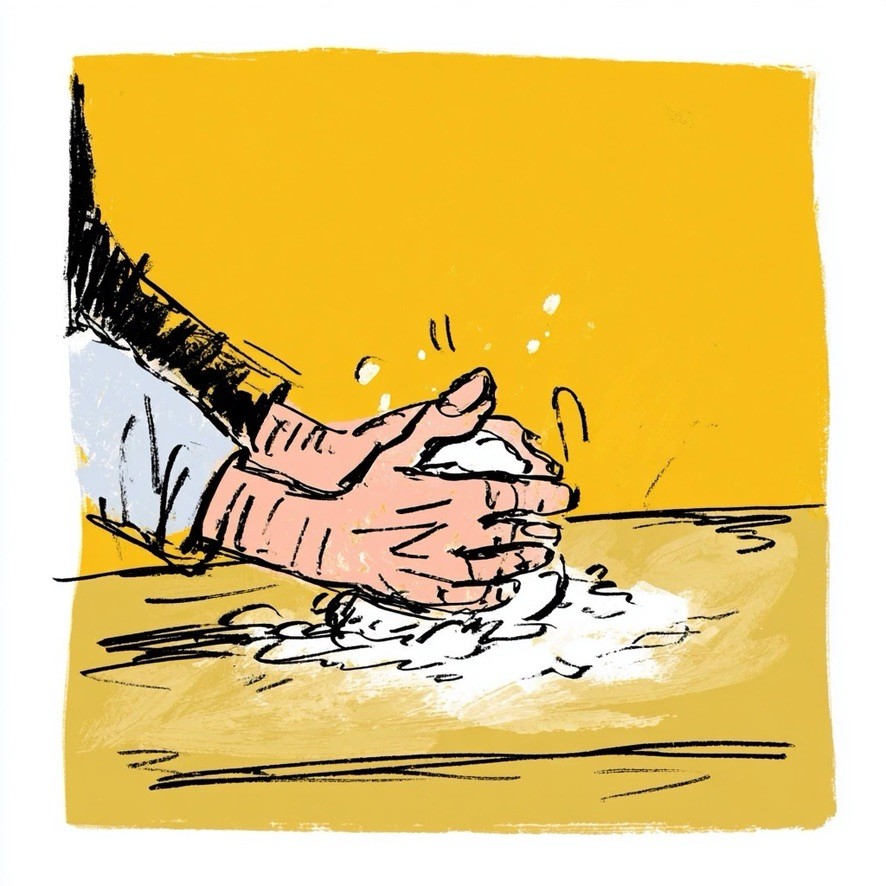
You're the one organizing this trip. Let's be honest, it's always you. You found the flights, booked the hotel, compared fourteen restaurants on Google, and now you have to choose between a food tour and a cooking class. Your husband says "whatever you want, honey" which means he has no opinion but will have a very strong one if the choice turns out to be wrong. Your mother-in-law wants a cooking class. Your daughter wants an Instagram café. You just want everyone to trust you for once since you're the one organizing everything anyway.
Good news: there's no wrong choice. There's a choice that fits your tribe and a choice that doesn't. And the difference isn't where you think.
What you do in a cooking class
You put on an apron. You learn to make puff pastry, a soufflé, or macarons. A chef shows you the technique, corrects your form, explains why the butter needs to be cold and not warm. Your husband will take three photos and check out after twenty minutes. Your daughter will love it if she can post the result. You'll leave with a concrete skill and, if all goes well, something edible.
It's an experience centered on doing. Hands in the flour, focused on precision. It's satisfying, it's fun, and you'll (in theory) be able to recreate the recipe at home. Marie-Antoine Carême, who codified French pastry in the 19th century, would probably be delighted to see American women attempting his techniques in a workshop in the 18th arrondissement.
A cooking class answers the question: how is it made.
What you experience on a food tour
You walk. You taste. You listen. Someone takes you to places you would never have found even with your three hours of research on Google, and explains why that piece of cheese in your hand traveled from a farm in the Jura, was aged in a cellar beneath your feet for eighteen months, and carries a tradition that monks perfected seven centuries ago.
Nobody checks their phone. Your husband asks questions. Your daughter listens. Your mother-in-law is captivated. You begin to understand why the French take food so seriously. Why a cheesemonger can talk about his seasonal goat cheese with the same passion a gallery owner talks about a Monet. Why every neighborhood in Paris has a gastronomic identity as distinct as a regional accent.
And most importantly, for once, you don't have to organize anything. Someone else is taking care of everything. All you have to do is walk, taste, and enjoy.
A food tour answers the question: why does it exist.
The real difference
A cooking class teaches you a technique. A food tour gives you a way of seeing. After a cooking class, you know how to make a chocolate éclair. After a food tour, you understand why the chocolate éclair exists, who invented it, and what it tells you about two centuries of French pastry genius.
One isn't better than the other. But they don't nourish the same thing. The class nourishes your skills. The tour nourishes your curiosity.
Diderot, who was obsessed with the question of how things work, would probably have loved both. But he would have started with the food tour. Because Diderot knew that before you learn how to make something, you need to understand why.
Once you understand the history behind what you eat, the cooking class takes on a whole other dimension. You’re no longer making a recipe. You’re recreating a piece of civilization.
The test to help you choose
If you go home and the first thing you want to do is recreate a dish in your kitchen, take the cooking class. You'll be happy.
If you go home and the first thing you want to do is tell your friends the incredible story of the guy who ages his cheeses in a former air-raid shelter, take the food tour. You'll be transformed.
And if you have the time and budget for both, do both. But do the food tour first. Because once you understand the history behind what you eat, the cooking class takes on a whole other dimension. You're no longer making a recipe. You're recreating a piece of civilization.
And your mother-in-law?
Take her on the food tour. After twenty minutes, she'll have forgotten all about the cooking class. After an hour, she'll want to know why Coco Chanel went to Angelina every day for her hot chocolate. After two hours, she'll be at the back of a wine cellar tasting her third glass of Burgundy with a smile you've never seen on her before.
That's the Paris effect when someone knows how to tell it. And for once, you're not the one who had to organize everything. ■
Come hungry. Leave with stories.
Private food and history tours in Paris. Your party only, three hours, with Mathieu.