Napoleon at the Table: Chambertin and Champagne
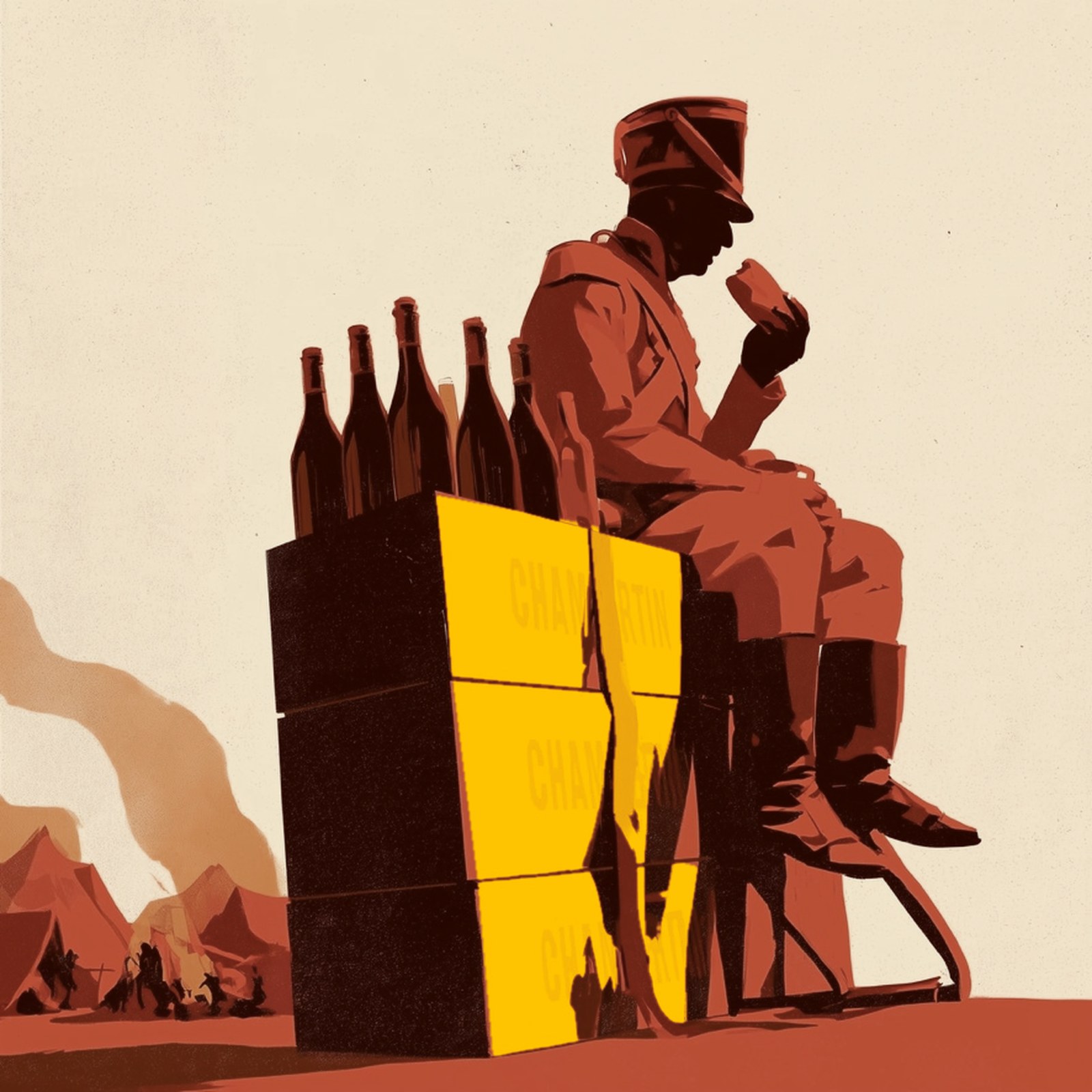
Napoleon was no gourmet. But he had one loyalty that never wavered, through fifteen years of power and half a dozen wars: a bottle of Chambertin.
Napoleon’s drinking habits at a glance. Favorite wine: Chambertin, a red Burgundy from Gevrey. Supplier: Soupé et Pierrugues, rue Saint Honoré, Paris. Age: five to six years. How he drank it: cut with water. Champagne: from his friend Jean Rémy Moët, for special occasions. On Saint Helena: Vin de Constance, a sweet wine from the Cape.
I drank my first Chambertin with my uncle Antoine. He was a great gourmet, in love with a beautiful table, and from the time I was fifteen or sixteen he made me taste fabulous wines that opened my palate and my mind. That first Chambertin was one of them.
Years later I used to watch Bernard Loiseau, the great chef, in interviews. I never met him, but I loved his passion, his expressiveness, his gift for words. I remember that for him, Gevrey Chambertin, the village that borrowed its name from the great vineyard, was the wine of wines.
Great Burgundy is a world treasure, largely built by monks and their walled clos. The Clos de Bèze, next to Chambertin, goes back to around 630, when the monks of the Abbey of Bèze began planting vines there. And all those vineyards give different wines from the same grape, Pinot Noir.
Fifteen years, one Burgundy
His valet Constant, who served him from 1800 to 1814, left the details. The Emperor drank a Chambertin of five or six years of age, always from the same merchants, Soupé et Pierrugues, at 338 rue Saint Honoré. They supplied every imperial residence, and on campaign the sons of the house took turns following the army with the bottles. Las Cases, who shared his first year of exile on Saint Helena, recorded what he was told: for fifteen years the Emperor had drunk the same Burgundy, which he liked and believed to be good for his health.
The scandal: he added water
Napoleon cut his Chambertin with water, often iced water. A great Burgundy, five years in the bottle, and the Emperor of the French poured water into it. What was sold as Chambertin in his day did not necessarily match the grand cru we know now. The modern appellations only came in the 1930s.
It sounds like a crime today. But people drank far more then, wine at every meal, often all day long. Without water you could end up rather drunk very quickly, and with his responsibilities and his endless days, that was not an option.
I have seen worse. On one of my first trips to America, as a young adult, I flew from New York to Los Angeles next to a passenger who ordered a glass of white wine. A very good one, a Chablis. She asked for ice, and dropped four cubes into it. I was absolutely scandalized. Napoleon, at least, had an excuse.
Champagne for the big days
Champagne was something else. He was a friend and loyal customer of Jean Rémy Moët, and he stopped at Épernay on his way to his campaigns to pick up cases. But Champagne was for occasions. Day to day, it was the Chambertin, the water, and very simple food. His valet Marchand noted that he loved potatoes, any way at all, even grilled in the embers.
If I had to cook for him tonight, I would keep it extremely simple, and very Swiss. Potatoes in their jackets, roughly crushed, with a piece of very good butter on top, left to melt and soak into the potato. A beautiful cheese board next to it. And the Chambertin, of course. Without the water.
And at the end, a sweet wine from the Cape
On Saint Helena, in exile, things changed. His household ordered a sweet wine from the Cape of Good Hope, the famous Constance, around thirty bottles a month. In 2016, a bottle of the 1821 vintage, one of those intended for him, was sold at auction. He died in May of that year.
I have never tasted Vin de Constance. But I know which sweet wine I would bring him: a Merle des Roches from the Domaine du Mont d’Or, in the Swiss Valais. It was the very first sweet wine I ever tasted, at sixteen, again thanks to my uncle, at the Rosalp in Verbier, Roland Pierroz’s restaurant, which no longer exists. We began a wonderful dinner with it. It is one of those wines I keep in a corner of my head, those magic moments when doors suddenly open onto whole worlds.
Finding a Chambertin in Paris
A good Chambertin is genuinely hard to find, even at good cavistes. And watch the vintage. A Chambertin drunk too young is a waste of a great wine.
If you want to taste your way through his story, and Joséphine’s, that is exactly what the Napoleon Food Tour is for.
Quick answers
What was Napoleon’s favorite wine?
Chambertin, a red Burgundy from Gevrey, today a grand cru, which he drank for some fifteen years, usually cut with water.
Did Napoleon drink Champagne?
Yes, from his friend Jean Rémy Moët in Épernay, but mostly for special occasions.
What did Napoleon drink on Saint Helena?
His household ordered Vin de Constance, a sweet wine from the Cape, about thirty bottles a month.
Why did Napoleon dilute his wine with water?
It was common at the time, when wine was drunk at every meal. Cutting it with water kept his head clear through very long working days.
Did Napoleon drink wine on campaign?
Yes. His Chambertin followed him from Egypt to Russia, carried by the sons of his Paris wine merchants.
Historical sources
Memoirs of Constant, Napoleon’s valet from 1800 to 1814. Emmanuel de Las Cases, Le Mémorial de Sainte Hélène. Memoirs of Louis Joseph Marchand, his valet in exile. Decanter, on the Grand Constance of 1821.
Come hungry. Leave with stories.
Private food and history tours in Paris. Your party only, three hours, with Mathieu.