Best Things to Do in Paris for Food Lovers
You've booked your table at Septime. You have the list of bistros recommended by the New York Times. You've even spotted three "secret" cocktail bars that 200,000 people have saved on Instagram. Congratulations, you're going to eat exactly like every other tourist who did the same research you did.
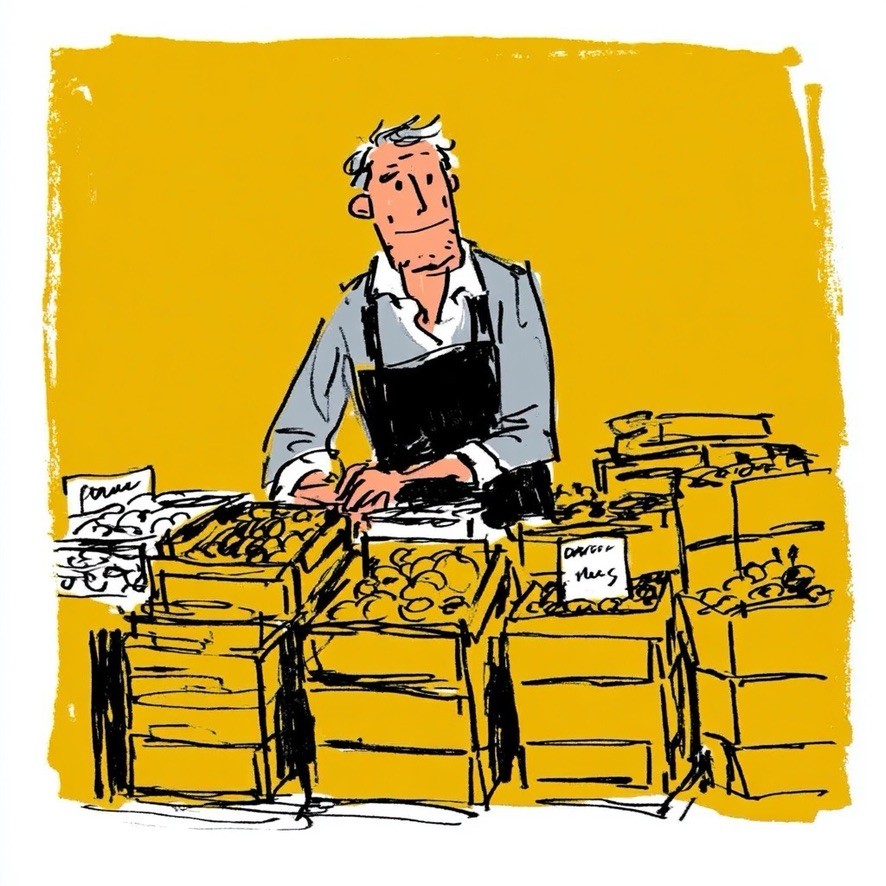
Paris is not eaten sitting down. Well, not only. The best gastronomic moments in this city are experienced standing up, walking, watching someone work, asking a silly question to a man who has been making the same gesture for forty years and who, for the first time today, smiles because someone is genuinely interested in what he does.
Restaurants are great. But they're only the surface.
The morning market
Not the covered market for tourists with paella stands and smoothies. The neighborhood market. The one where old ladies arrive at 8 AM with their carts and squeeze the tomatoes with surgical concentration. The one where the farmer knows his customers by first name and the fishmonger explains why his line-caught sea bass is worth three times the price of the farmed one, and why he's right.
Every arrondissement has its own. Marché d'Aligre, Marché des Enfants Rouges, Marché Saxe-Breteuil with the Eiffel Tower as a backdrop if you absolutely must have your photo. The secret is to go early, plan nothing, and talk to people. Even badly. Even with three words of French. The merchants of Parisian markets are the last romantics of this city.
The artisans who are not waiting for you
There are bakers in Paris who wake up at 2 AM for a loaf you'll eat in three minutes without thinking. Some work with ancient wheat varieties, cultivated long before industry turned grain into a standardized product. Their bread digests the way bread digested in the 19th century, which is to say painlessly. People who thought they were gluten intolerant discover they were simply intolerant to bad flour.
There are cheesemongers who spend their days in cellars at 12 degrees so your taste buds can experience a moment no starred restaurant will ever replicate. Charcutiers who master salting and aging techniques passed down through generations, who choose their farmers one by one, who refuse industrial shortcuts because time is an ingredient that cannot be replaced. Pastry chefs who carry on a craft that France has been perfecting since the Middle Ages, layer by layer, gesture by gesture, each creation telling five centuries of obsessive research into butter, sugar and temperature.
Chocolatiers who refuse to work above 30 degrees and close shop in August because the cocoa deserves it.
Each of these artisans is a piece of civilization. A cultural treasure as much as a culinary one, born from centuries of refinement, transmission, failure and starting over. They are not tourist attractions. They are obsessives who have devoted their lives to one thing and who do it better than anyone.
But in a city as large as Paris, offering as many possibilities as it does, knowing who truly does excellent work, who offers the best products, who has the best philosophy on local sourcing, organic practices and health, that expertise is not something you improvise. It's built over years. Decades. And the only way to truly access it is with someone who has done that work for you.
Colbert, who invented French mercantilism, understood that a country's wealth is measured by the quality of its artisans. Three centuries later, France still stands on that principle. But the artisans themselves don't advertise.
Restaurants serve you the result. The rest of Paris shows you the process. And the process, believe me, is infinitely more fascinating than the plate.
The neighborhood wine cellar
Not the trendy wine bar serving natural wine in stemless glasses with a lo-fi playlist. The independent wine merchant's cellar. The one with 400 bottles, 380 of which you've never heard of. The one who will ask what you had for lunch before recommending anything. The one who will open a bottle for you to taste, not to sell it to you, but because he wants to share what he loves.
A good Parisian wine merchant is a librarian of wine. He knows each bottle the way you know a novel. And if you ask the right question, he'll tell you about the winemaker, the terroir, the vintage, and why this Chinon at 11 euros is objectively superior to the Châteauneuf-du-Pape at 45 you would have chosen on your own.
The food tour as the keystone
Everything above, you can try to do on your own. Find the right market, the right artisan, the right cellar. You can. But you'll spend three days searching for what a passionate guide shows you in three hours. Not because you're incompetent. Because Paris doesn't give itself up easily. It's a city that rewards those who know where to knock.
A well-done food tour is the intelligent shortcut. It's someone who has spent years building relationships with artisans, understanding the neighborhoods, connecting history to the plate. Someone who transforms your time in Paris into something deeper than a collection of good addresses.
The bottom line
Paris is the gastronomic capital of the world. But Parisian gastronomy doesn't live in restaurants. It lives in the markets at 8 AM, in the aging cellars at 12 degrees, in the bakeries at 2 AM, in the conversations between a wine merchant and his Tuesday regular. It lives in the gestures, the obsessions, the traditions passed from hand to hand for centuries.
Restaurants serve you the result. The rest of Paris shows you the process. And the process, believe me, is infinitely more fascinating than the plate. ■
Come hungry. Leave with stories.
Private food and history tours in Paris. Your party only, three hours, with Mathieu.